
World economy news: Start the week by separating a daily oil-price move from a weekly trend, a political promise from an operating policy, and a release calendar from a published inflation result. This edition connects America’s cost-of-living debate, crude oil, forthcoming Chinese and US price reports, Taiwan’s latest inflation data and COP31 to practical household and business questions.
Information cutoff: November 9, 2026, 05:15 Korea Standard Time (KST), or November 8, 20:15 UTC. It is Monday morning in Korea but still Sunday in the United States and Europe. Oil prices below are Friday, November 6 settlements, not live Monday quotes. The month measured by a statistic is distinguished from its release date. This is a selection of important developments, not an exhaustive account of every event. Scheduled reports and meetings are not treated as completed events. The facts and cutoff match today’s Korean world edition.
1. America’s affordability debate: an election result does not immediately change a household bill
The development. AP reported on November 8 that pressure to deliver economic relief now confronts both President Donald Trump and the incoming Democratic congressional majority. Budget and economic-policy negotiations will matter for how that demand is addressed. The report describes political priorities and the choices ahead. It does not mean a new tax cut, benefit or household subsidy has already taken effect. Source: AP, November 8.
The background in plain English. Inflation measures how the price of a basket of goods and services changes. A lower inflation rate can still leave that basket more expensive. Fiscal policy concerns government taxes and spending; monetary policy includes central-bank decisions intended to influence demand and inflation. They interact, but they are different decisions. A political promise to improve affordability is therefore not the same as a lower mortgage quotation or a revised tax bill.
How it could reach everyday finances. An enacted budget or law can change eligibility for benefits, tax liabilities or public orders. Those changes can affect disposable income—the money available after taxes—and business sales. Negotiations, implementation dates and eligibility rules stand between a political proposal and a family’s cash flow. Our interpretation is to keep that sequence visible. It is not a prediction that any particular proposal will pass. Counting an unconfirmed benefit as money available this month creates a gap if approval is delayed or the household is ineligible.
Hypothetical example, not a forecast: a basket costing $100 rises to $105, then becomes 2% more expensive the following year. Its new cost is $107.10. Inflation has slowed from 5% to 2%, but the household still needs another $2.10 for the unchanged basket. Actual spending can differ because people change quantities or products. The example illustrates price levels and rates of change; it is not an estimate of future US inflation.
- If you pay US household bills: build the current budget from confirmed income and actual invoices. Keep a separate checklist for any future government announcement. Check the final eligibility rules, application process and effective date before counting a benefit. The limitation is that a policy may not apply equally to every household, even after enactment.
- If your small business sells to US customers: separate election-related expectations from signed orders when planning inventory or staffing. For any tax or tariff change, check the covered products and start date, and obtain qualified local advice where necessary. Political direction alone cannot guarantee additional orders or settle the meaning of an individual contract.
2. World economy news and oil: a small Friday gain inside a large weekly decline
Verified market facts. CNBC’s November 6 closing report put Brent crude futures at $98.32 a barrel, up $0.03 on the day, and US West Texas Intermediate futures at $90.83, up $0.31. Over the week, however, Brent fell more than 16% and WTI declined nearly 13%. Both descriptions can be true because they use different starting points. These are Friday settlements, not a quotation for the new trading week. Source: CNBC, updated November 6 at 14:54 US Eastern time.
Context and terminology. The report described competing hopes for a diplomatic resolution to the Middle East conflict and risks of renewed escalation. Neither outcome is established by a market price. A futures contract concerns a transaction for a specified future period. Brent and WTI are different crude-oil benchmarks. They are not the price of gasoline at a particular filling station. An analyst’s probability or price projection remains an opinion, rather than a measured frequency or a guaranteed outcome.
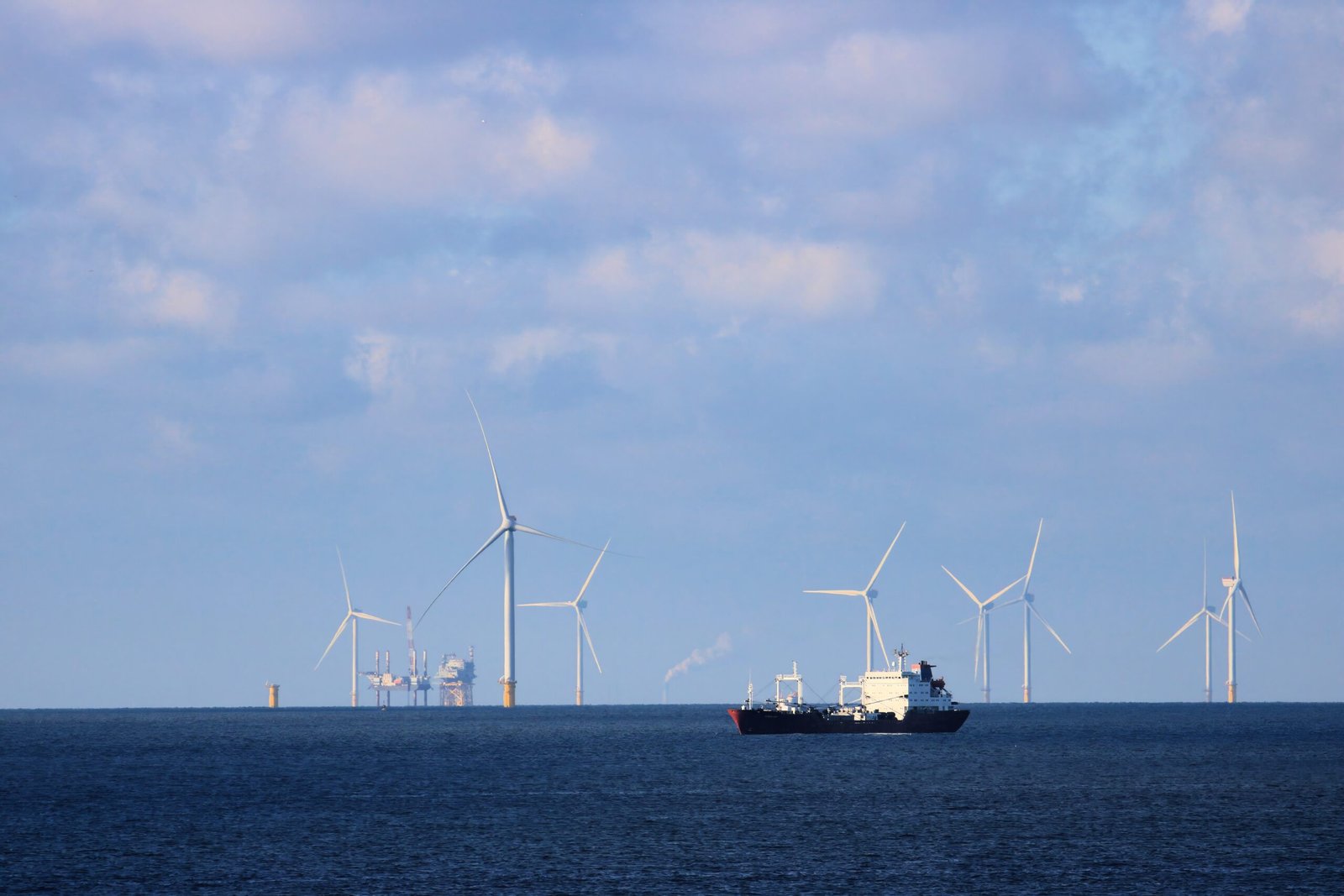

The transmission to everyday costs. Crude prices affect refinery input costs. Processing, transport and inventory turnover then sit between crude purchases and retail fuel sales. Exchange rates, taxes, distribution costs and contracts also matter. Airlines, manufacturers and delivery companies may experience a change in fuel costs before their customer prices adjust. Sustained cheaper crude could ease some cost pressures; that is a conditional economic mechanism, not a claim that last week’s fall will continue or reach every bill immediately.
Hypothetical calculation: suppose a dollar-priced input falls from $100 to $90 while the exchange rate changes from KRW1,400 to KRW1,450 per dollar. Its won cost falls from KRW140,000 to KRW130,500, a saving of KRW9,500, or about 6.79%. This is not an oil or currency forecast. Freight, tax and processing costs are excluded. It shows why a 10% change in a dollar price need not produce a 10% change in the buyer’s local-currency bill.
- If fuel is a large household expense: record both the price per litre on receipts and the volume used each month. That distinguishes a price change from a change in driving. Check discount conditions and the time or travel cost of reaching a cheaper station. A fall in crude prices cannot promise a matching reduction in next week’s spending.
- If your business depends on transport: check the fuel-surcharge formula and adjustment cycle in actual contracts. Test higher, unchanged and lower costs against cash flow. Verify quotation validity and exchange-rate dates. Contract timing limits how quickly benchmark prices affect you; this is a budgeting exercise, not advice to trade oil or derivatives.
3. Chinese and US inflation reports: the calendar is not the result
What is scheduled. China’s National Bureau of Statistics lists consumer- and producer-price reports for November 9 at 09:30 China time, or 10:30 KST. They are still forthcoming at this edition’s cutoff. The US Bureau of Labor Statistics schedules October CPI for November 10 at 08:30 Eastern time and October PPI for November 13 at the same time. Those US releases correspond to 22:30 KST on the respective dates. Schedules can change, so consult the original agencies. China’s official calendar; BLS November calendar.
Why the distinction matters. CPI tracks prices for consumer purchases, while PPI follows prices at the producer level. They cover different baskets and use different weights—the importance assigned to each component in the overall index. A month-to-month change compares with the preceding month; a year-on-year change compares with the same month a year earlier. Confusing those comparisons mixes recent movement with a longer accumulation of price changes.
Possible economic effects, with limits. Inflation data can change expectations about interest rates and demand. Those expectations may influence currencies, financing costs and price negotiations. A market reaction also depends on what participants expected beforehand and which components moved. A higher inflation figure does not mechanically guarantee that a particular currency will strengthen that day. We do not supply unverified October results or turn forecasts into reported statistics. A household’s payment deadline remains real even when a release outcome is uncertain.
Hypothetical example: an index stands at 100 a year ago, 104 last month and 104.2 this month. The annual increase is 4.2%, while the monthly increase is about 0.19%. This is a simple, unadjusted calculation, not Chinese or US data. The same latest index level answers different questions depending on the comparison period. Check the period and whether a series has been seasonally adjusted before comparing headlines.
- If a foreign-currency payment or trip is approaching: first record the amount, currency and due date. After a release, compare actual all-in exchange quotations rather than a headline rate alone. Check fees and cancellation costs. Correctly anticipating a statistic does not guarantee a better exchange rate, and a required payment should not be missed because of a forecast.
- If you negotiate with an overseas supplier: compare the relevant published component with the supplier’s written quotation, and request the basis for a price adjustment. Check the reference month, currency and inclusion of freight. A national price index is not an individual product’s cost statement and cannot establish all of a supplier’s expenses.
4. Taiwan’s October prices: consumers and producers face different baskets
Already published data. Taiwan’s Directorate-General of Budget, Accounting and Statistics reported October CPI up 0.06% from the previous month and 2.33% from October 2025. PPI rose 1.48% on the month and 19.66% on the year. The official page was updated November 6. Unlike the forthcoming reports above, these October results are already available. The headline figures alone do not establish which individual industry or product contributed how much. Source: DGBAS, The Price Indices for October 2026.
Plain-language background. Producers and consumers buy different collections of goods at different stages of a transaction. Producer prices can rise much faster than consumer prices. A business might absorb part of a cost increase in its profit margin, renegotiate contracts later or sell an item with a small weight in household spending. These are possible general mechanisms, not a finding that each explains Taiwan’s latest results. Subtracting CPI from PPI does not produce a forecast of future consumer inflation.
What this means for decisions. A company buying from Taiwan can use producer-price information as context, but still needs the relevant component quotation, delivery conditions and exchange rate. A traveller cannot apply national CPI directly to the price of one hotel. Location, travel dates and booking terms can dominate that particular bill. Imported retail products elsewhere also pass through freight, local distribution and currency conversion. There is no automatic one-for-one link between this report and a Korean consumer’s checkout price.
Hypothetical calculation: suppose a product sells for 100 units and its material cost is 40. If only that material cost rises by 10%, the added cost is four units. Passing it through in full with everything else unchanged would make the selling price 104. Productivity, margins, currency and other costs can also change. This example illustrates cost shares; it does not apply Taiwan’s reported PPI increase to a particular product.
- If you import Taiwanese products: compare old and new quotations for the same specifications, currency, delivery date and shipping terms. Ask which cost item supports a proposed increase. Check the actual contract before making a change. A broad index cannot prove every supplier expense or determine a contract’s legal meaning.
- If you are planning a Taiwan trip: update flights, lodging and meals separately using prices you can actually book. Check exchange rates, cancellation charges and peak-season conditions. National inflation is context, not a guarantee of a fair hotel price or next month’s room rate.
5. COP31 approaches: climate negotiations and an investment decision are different stages
The scheduled event. UNFCCC’s official information places COP31 in Antalya, Türkiye, from November 9 to 20. At our cutoff it is 23:15 on November 8 in Antalya, so we do not describe opening proceedings or agreements as completed. COP means the Conference of the Parties: the meeting of countries that are parties to the climate convention. This is its 31st session. Source: official UNFCCC COP31 information.


Economic context. Climate negotiations can influence national policy and international cooperation. A conference goal, a country’s legislation and budget, a corporate order and a household installation are nevertheless separate steps. Energy transition means changing how energy is produced and used. Equipment carries upfront and maintenance costs, while savings depend on usage and local arrangements. Holding a conference alone does not establish a company’s future sales or a family’s electricity savings.
How the issue can reach households and firms. More concrete policy may encourage firms to review efficiency, supply-chain emissions information and facility improvements. Households can use the discussion as a prompt to check energy consumption. But an international objective is not confirmation of a domestic subsidy. Actual funding depends on the local notice, budget and eligibility requirements. We do not count an agreement that has not been reached, or a regulation that has not been implemented, as an assured financial return.
Hypothetical example: an efficiency upgrade costing KRW1.2 million and saving a net KRW20,000 each month has a simple payback of 60 months, or five years. Financing, repairs, deterioration and changing tariffs are excluded. If monthly savings are only KRW10,000, the same simple calculation gives ten years. A green label is not enough to establish value. This is an illustration of a calculation, not a recommendation to buy a particular installation.
- If your household is considering an equipment change: use recent electricity consumption to assess quotations and maintenance costs. Count a subsidy only after verifying an actual programme notice. Check installation feasibility, warranties and expected years of use. Simple payback omits several real costs and cannot guarantee savings.
- If you supply an export customer: list the energy and emissions information the customer actually requests. Distinguish contract requirements and rules already in force from conference discussion. Check measurement scope, verification method and submission deadlines. The fact that COP31 is taking place does not itself impose an identical new duty on every business.
Three questions to carry into the week
Is it strange if gasoline stays expensive after crude falls? Not necessarily. Futures prices, refining and distribution costs, currencies, taxes and inventory timing differ. Compare actual receipts and consumption first.
Must I act before an inflation release? A calendar entry is not a result. Establish your payment deadline and budget first, then check the official report’s reference period, comparison basis and components. One statistic cannot settle every economic question.
Is climate-conference coverage a subsidy announcement? No. International negotiation, domestic implementation and personal eligibility require separate checks. An unannounced benefit should not be counted as confirmed funding.
For more explanations, visit the English homepage and the English economic analysis list. This article offers general education, not individual investment or trading recommendations, and makes no promise of returns.
Edited by Money & Why. AI assisted with organising public information and composing explanations. Source dates, reported facts and hypothetical calculations were checked separately. Photographs are archival images used under the stated licences; examples are invented for explanation, not personal testimony or forecasts. Report errors through our contact and corrections page.