
World economy news: Persistent US price pressure is weighing on the interest-rate outlook and stocks. China reported a strong rise in the value of trade, while American small businesses reported both pricing plans and difficulty filling jobs. This edition connects inflation, markets and energy, Chinese trade, small-business operations and the upcoming US holiday to practical household and business decisions.
Information cutoff: November 11, 2026, 05:50 Korea Standard Time, equivalent to November 10, 15:50 US Eastern Time. The US market figures below are explicitly dated intraday observations, not closing prices. Inflation, trade and business surveys concern October. Veterans Day is the scheduled US holiday on November 11. This is a selection of important developments, not an exhaustive account of world events. The Korean and English editions share the same facts and cutoff.
1. US inflation: a slower increase still means higher prices
Reported facts. The November 10 BLS release put October CPI growth at 0.4% month on month, seasonally adjusted, after September’s 0.6%. Core prices rose 0.3%, food 0.5% and shelter 0.3%. We cross-checked the development against AP’s inflation report.
The Consumer Price Index combines price movements across a basket of goods and services, with weights reflecting household spending. Seasonal adjustment reduces recurring calendar effects, making monthly comparisons more useful. Core inflation excludes food and energy to help identify underlying pressures. It does not imply that groceries or utility bills are unimportant. A household spending heavily on rent and food can experience something quite different from the average.
A measurement limitation: missing October 2025 survey data during the funding lapse prevent publication of this October’s headline and core annual changes. Some individual categories retain annual comparisons. We do not invent missing figures. A monthly change is not an annual rate, and multiplying one month by twelve does not produce an observed annual result.
Interpretation and transmission. Persistent inflation can lead markets to reassess the likelihood of rates staying high or rising further. That reassessment is not a new policy decision. Financing costs may pass through bank funding, fresh loan offers and corporate investment budgets. Existing fixed-rate contracts do not automatically change when a statistical release appears. Nor does a US inflation report alone determine the rates available to a Korean borrower.


Hypothetical example. Suppose an unchanged basket costs KRW500,000 and its prices rise by 0.5%. It then costs KRW502,500, an additional KRW2,500. This illustrates percentage arithmetic, not a forecast for Korean groceries. Buying different quantities or switching products changes the spending result. Separating unit prices from quantities helps explain whether a bigger bill reflects inflation, a different shopping basket, or both.
Action for a household with a large grocery budget. Compare a few regularly purchased items on two months of receipts. Use prices per 100 grams or litre, including delivery charges, rather than the headline package price. Check expiry dates and whether substitutes fit dietary needs. The exercise can reveal avoidable spending, but it cannot remove costs such as rent that are difficult to change quickly.
Action for someone approaching a loan renewal. Check the renewal date and rate-reset period, then compare offers for the same principal and term. Include early-repayment charges and the expiry of discounts. Obtain an actual lender quotation before changing a contract in response to an inflation headline. Future rates remain uncertain; this article does not make a personal borrowing or investment decision for you.
2. Stocks, yields and oil measure different things
Reported facts. AP’s November 10 observation at 12:28 Eastern showed the S&P500 down 0.8%, the Dow down 0.6% and the Nasdaq down 1.3%, as inflation revived concerns about rates. See the distributed AP market report. Separately, Yahoo Finance’s intraday coverage described falling crude prices. Observations made at different times are not presented here as one closing snapshot.
A stock index summarizes share prices across a group of companies. A bond yield relates its price and payments to the return available to an investor, and helps inform borrowing-cost comparisons. Crude oil is an internationally traded energy input. These markets interact, but they do not measure the same thing. Lower oil can coexist with weaker shares when financing costs or earnings expectations dominate investors’ attention.
Interpretation. A higher discount rate reduces the present value assigned to earnings expected far in the future. Companies carrying substantial debt may also face higher interest expense as financing is renewed. Cheaper crude can work in the other direction by easing transport or production costs. However, exchange rates, taxes, refining costs, inventories and contracts affect the timing and size of any benefit. An intraday move does not establish next week’s trend.
Hypothetical example. Imagine a dollar-priced input becomes 5% cheaper while buying dollars with won becomes 4% more expensive. Its simple won cost changes by 0.95×1.04=0.988: a decline of only about 1.2%. Freight and taxes are excluded. This is not a market forecast. It explains why an international price decline need not translate into an identical reduction in a domestic quotation.
Action for a household planning overseas travel or tuition. Write down confirmed payment amounts and due dates. Compare exchange quotations together with fees, the applicable time and cancellation conditions. Do not turn a stock or oil headline into a confident currency forecast. This is a way to understand an existing cash requirement, not a recommendation to trade a currency.
Action for a business with substantial transport costs. Separate base freight from fuel surcharges in supplier quotations. Check the reference index, adjustment month, quotation validity and minimum-volume conditions. A failure to cut a charge immediately after oil falls does not by itself establish unfair pricing. Contract timing and other cost changes need examination first.
3. China’s trade surge: export value is not shipment volume
Reported facts. Customs figures relayed by China’s commerce ministry put October exports at CNY2.79 trillion, up 28.7% year on year, and imports at CNY2.08 trillion, up 34.7%. These are yuan-denominated figures; we do not combine them with dollar-based growth rates. See the commerce ministry report, with the broader development checked against the State Council’s English release and AP’s trade coverage.
Trade value depends on quantities, unit prices, the mix of expensive and inexpensive products, and the currency used to express the result. Where component prices move sharply, a jump in value cannot establish the same increase in factory output or every company’s orders. The trade balance is exports minus imports. A large surplus does not, on its own, demonstrate strong household consumption or healthy profits at every exporter.
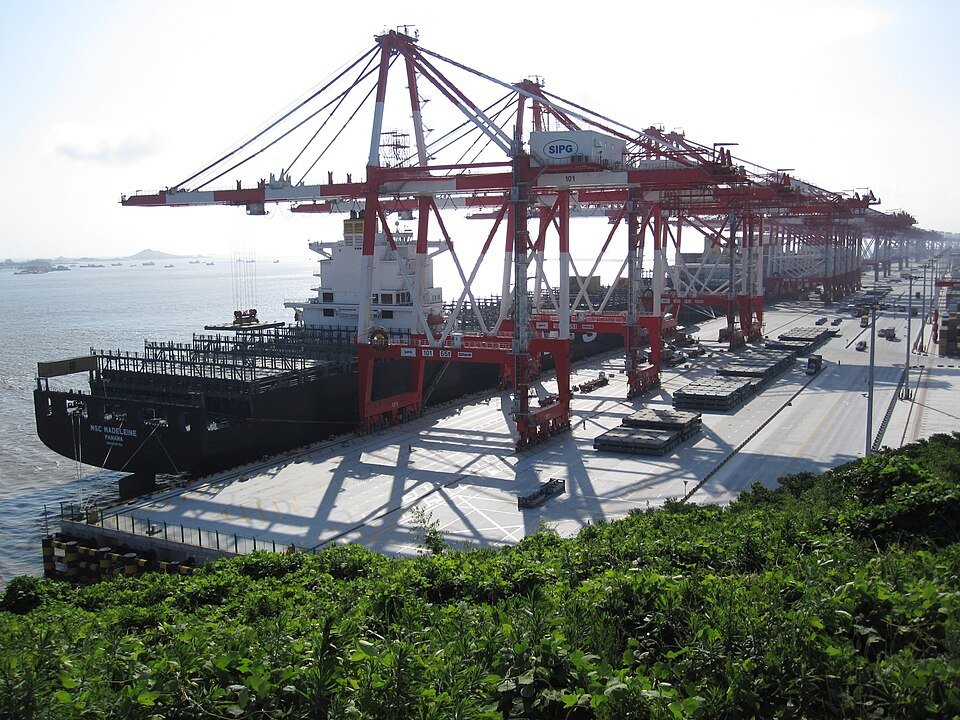

Interpretation and transmission. Rising Chinese imports may create opportunities for foreign suppliers, while expanding exports may increase competition for sellers elsewhere. The effect on a Korean business depends on its products, buyers, contract currency and costs. A higher selling price can lift revenue while faster growth in component costs squeezes profit. National totals are a starting point for investigation, not a substitute for a company’s purchase orders.
Hypothetical example. A seller ships 100 units at CNY10 each, then ships the same 100 units at CNY12. Revenue rises from CNY1,000 to CNY1,200, or 20%, with no increase in volume. Conversely, heavier discounting can conceal volume growth in the sales total. This example does not claim to decompose China’s actual export increase.
Action for a supplier selling to Chinese buyers. Track enquiries, confirmed orders and expected receipts separately. Check quantities, prices, inspection and return conditions, and payment currency on the purchase order. Do not count a verbal enquiry as a completed sale. Strong national import data cannot eliminate the credit risk of a particular buyer or the possibility of delayed payment.
Action for a shopper comparing imported goods. Compare the total cost after delivery, applicable taxes and potential return charges. Check that the models are identical and suitable for local use. Export growth does not imply discounts on every product. Currency changes and after-sales support can erase a small apparent saving on the product’s displayed price.
4. Small businesses: a steady headline can hide pricing and hiring pressure
Reported facts. The NFIB’s November 10 release put October member optimism at 97.8, down 0.1 point. Some 36% reported unfilled openings, and a net 37% planned price increases. This is a US member survey, not a census of all businesses or evidence about Korean shopkeepers.
A net percentage describes the balance between responses, here plans to raise versus lower prices. It does not mean prices will rise by 37%. A composite optimism index combines several questions. Even when that headline barely moves, staffing difficulties, costs and pricing intentions can move differently. Plans must also be distinguished from changes that businesses eventually implement.
Interpretation. An inability to hire can limit opening hours or production. Higher pay can increase operating costs. Raising prices to recover those costs may not improve profit if customers buy less. These are possible operating mechanisms, not proof that every respondent faces the same problem. The survey offers a view of business concerns; it is not a confirmed reading of future consumer inflation.
Hypothetical example. A shop sells 1,000 items monthly at KRW10,000 each. Variable cost is KRW6,000 per item and fixed costs are KRW3 million, leaving KRW1 million. If its price rises 5% but volume falls 10%, revenue becomes KRW9.45 million. Variable costs are KRW5.4 million and fixed costs remain KRW3 million, leaving KRW1.05 million. Taxes and additional labour costs are excluded. A higher price does not mechanically deliver the same percentage increase in profit.
Action for a small-business owner. Separate materials, labour and rent before revising prices. Calculate cases in which sales volume holds steady and cases in which it falls. Include payment fees, waste and customer attrition. A spreadsheet can clarify assumptions but cannot guarantee demand, so observation and records from a limited change matter.
Action for a jobseeker. Distinguish a broad recruitment headline from the conditions of an individual vacancy. Verify guaranteed hours, pay components, contract duration and training charges in writing. Numerous unfilled positions do not necessarily mean more suitable jobs for a particular applicant. A member survey in another country should not be treated as a direct measure of the local labour market.
5. Veterans Day: check when money becomes usable
Confirmed calendar information. Federal Reserve Financial Services lists a closure for Veterans Day on November 11. The New York cash-order instructions say orders placed before noon on November 10 are available for carrier pickup on November 12. These are institutional cash-service instructions, not a universal timetable for personal transfers. See the official 2026 holiday notice.
A banking business day, cash delivery, payment submission and final receipt are separate stages. An app’s confirmation that it accepted an instruction may not mean the recipient can spend the money immediately. International transfers depend on holidays in more than one country, intermediary institutions and the particular service. The notice alone does not show that every payment service stops or every securities exchange closes.
Transmission and a hypothetical example. Suppose a business expects USD2,000 from an American customer and plans to use it immediately for supplies. If receipt is delayed one day, the receivable has not vanished, but spendable cash can be insufficient that day. This illustrates the difference between a recorded sale and available money. It is not a forecast that a specific transfer will take one extra day.
Action if you have a US payment deadline. Establish which time zone defines the due date, and whether submission or receipt counts as payment. Consult the chosen institution’s holiday notice and expected processing schedule, and retain the reference number. If a sent payment appears late, check its status before sending another one. One holiday calendar cannot guarantee arrival across different services.
Action for a business receiving overseas revenue. Keep expected receipts separate from confirmed funds. Map wages, rent and supplier payments that would still be due if receipt is delayed. Check contractual late-payment terms and bank charges. Maintaining extra liquidity has a cost, and calendar planning does not resolve a customer’s inability to pay.
Three questions to take from today’s world economy news
First, identify what each number measures: monthly or annual change, value or quantity. Second, locate the date and conditions under which it affects your own contract. Third, mark which assumptions in an illustration differ from your circumstances. Consumers, borrowers and business owners may need different checks after reading the same headline. No section recommends a personal asset trade or promises a return.
For earlier context, visit the economy archive and English article list. Keep the cutoff in each older article separate from today’s information.
Written and edited for Money & Why. We research and cross-check public and official sources. AI tools assisted research, draft organization and language review for this article; facts, sources, calculations and clarity are checked before publication. Photographs are credited archive images, not AI-generated event photographs. Send errors or correction requests through our contact and corrections page.